| ||
|
opis
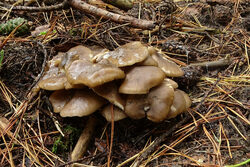
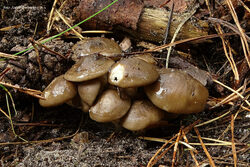
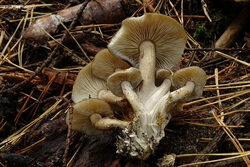
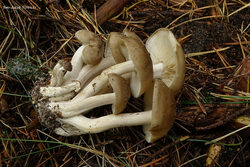
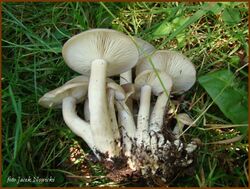
Trzon białawy, kremowy do jasnobrązowawego, z wiekiem ciemnieje; 25-100 x 4-15 mm, równogruby, zwykle powyginany, trzony sąsiednich owocników zrośnięte u podstawy; powierzchnia gładka, wzdłużnie włókienkowata.
Stipe whitish, cream-coloured to light brownish, with age darkening; 25-100 x 4-15 mm, equal, usually flexuous, stipes of adjacent sporocarps coalescent at the base; surface smooth, longitudinally fibrillose.
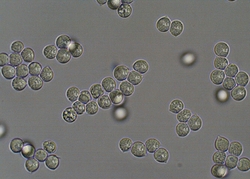
zarodniki
występowanie
jadalne czy trujące? 🟢
uwagi



Pozostałe podblaszki z grupy kępkowca jasnobrązowego (Lyophyllum decastes), w tym i opisany na tej stronie gatunek, z racji tego, że są nierozróżnialne makroskopowe a cechy mikroskopowe są dość zmienne można w praktyce grzybiarskiej traktować jako jedną grupę.
Remaining Lyophyllum from the group kępkowiec jasnobrązowy (Lyophyllum decastes), including the species described above, on account of being microscopically indistinguishable and macroscopic variable can be regarded as belonging to the same species.
w rejestrze grzybów chronionych i zagrożonych GRej
zapisy w GRej wg stanu na 01.04.2024 14:12 1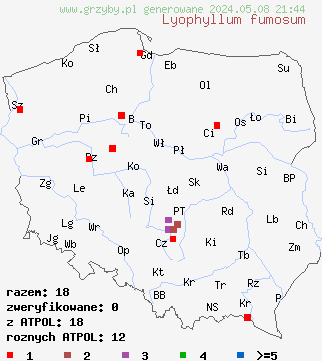
ID na żółtym tle to oznaczenie zweryfikowane przez kustosza GRej, pozostałe oczekują na weryfikację.
Fotografie oznaczone [z wątku] są automatycznie pobrane z wątku bio-forum.pl wskazanego we wpisie; aby upewnić się które odnoszą się do wpisu, należy zajrzeć do wątku.
AB94 374215 BD08 178324 CA89 373027 CC15 296884 CC83 178370 DE35 285937 350110 375082 DE47 177183 246211 DE55 178718 362757 372994 DE56 177232 332781 DE76 146812 EC35 318290 FG33 177133
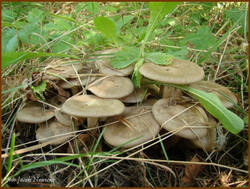
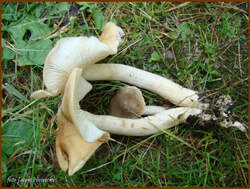
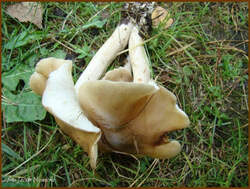
ID 146 812 oznaczenie: Lyophyllum fumosum; lokalizacja: 1,5 km W,Nowa Wieś,gm.Dąbrowa Zielona, DE76; data zbioru: 19 wrz 2009; sielisko, podłoże, sposób wzrostu: las sosnowy:obniżenie terenu z rowami odwadniającymi;z drzew dąb,osika,brzoza,czeremcha,kruszyna, na ziemi,na trawiastej ścieżce, w wiązkach,ponad sto owocników; leg. det. Jacek Nowicki; eksykat: tak,wyślę Ani; uwagi: fot.278271 fot.278272 fot.278273 fot.278274 fot.278275 fot.278276 [notatka: nie] [fotografie: tak];
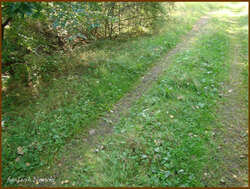
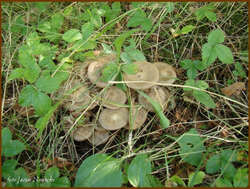
ID 177 133 oznaczenie: Lyophyllum fumosum; lokalizacja: Zyndranowa, pow. krośnieński, woj. podkarpackie, FG33; data zbioru: 26 wrz 2010; sielisko, podłoże, sposób wzrostu: przy leśnej drodze, na ziemi pod sosną, leszczyną i jodłą, 1 kępka, kilkadziesiąt owocników; leg. det. Anna Hreczka; eksykat: Tak, zostanie przesłany do Ani Kujawy; uwagi: zdjęcia i dyskusja na temat gatunku [bf:377988] [notatka: nie] [fotografie: tak]; związane wątki bio-forum.pl: 377988 ;
ID 177 183 oznaczenie: Lyophyllum fumosum; lokalizacja: 1 km N,Wólka Pytowska,gm.Kodrąb, pow. radomszczański, woj. łódzkie, DE47; data zbioru: 30 wrz 2010; sielisko, podłoże, sposób wzrostu: trawiaste pobocze drogi biegnącej przez las sosnowy, na ziemi, w wiązkach; leg. det. Jacek Nowicki; eksykat: tak,wyślę Ani; uwagi: 51st7'13,77"N 19st38'9,97"E; fot.381126 fot.381127 fot.381128 [notatka: nie] [fotografie: tak];
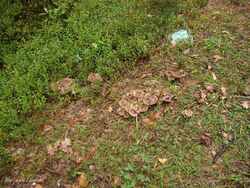
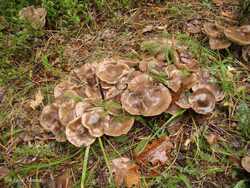
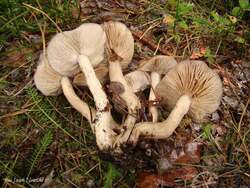
ID 177 232 oznaczenie: Lyophyllum fumosum; lokalizacja: 1 km S,Grzebień,gm.Radomsko, pow. radomszczański, woj. łódzkie, DE56; data zbioru: 29 sie 2010; sielisko, podłoże, sposób wzrostu: trawiasta ''ścieżka'' w wysokopiennym lesie gł.sosnowym, na ziemi, w wiązkach;kilkadziesiąt owocników w dwóch rzutach; leg. det. Jacek Nowicki; eksykat: tak,wyslę Ani; uwagi: 51st 01' 15,0"N 19st 29' 48,1"E; fot.381263 fot.381264; drugi rzut -19.09.2010; fot.381265 [notatka: nie] [fotografie: tak];
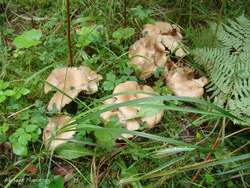
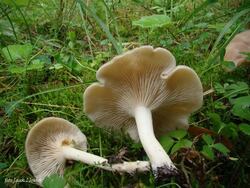
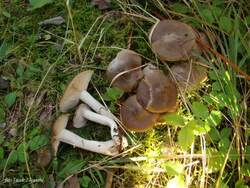
ID 178 324 oznaczenie: Lyophyllum fumosum; lokalizacja: Poznań, pd.zach. część Parku Sołackiego (przy placu zabaw dla dzieci), pow. poznański, woj. wielkopolskie, BD08; data zbioru: 5 paź 2010; sielisko, podłoże, sposób wzrostu: 100-letni wielogatunkowy park miejski o charakterze krajobrazowym z udziałem dorodnych buków, poza tym grab, klon, topola, lipa, gatunki egzotyczne, na ziemi pod bukiem, kępka kilkunastu owocników; leg. Barbara Kudławiec, det. Anna Kujawa; eksykat: tak, zostanie dostarczony Ani K.; uwagi: zdjęcia w wątku [bf:380221]; datę fotografowania i pobrania owocników przyjęłam jako datę znalezienia; stanowisko oglądałam ponownie 19 października, wciąż jeszcze widoczne były owocniki, choć trochę "zmarnowane", ale były [notatka: nie] [fotografie: tak]; związane wątki bio-forum.pl: 380221 ;
ID 178 370 oznaczenie: Lyophyllum fumosum; lokalizacja: Gniezno, Park Miejski leżący pomiędzy ulicami: Jana III Sobieskiego, Konikowo i Aleją Marcinkowskiego, pow. gnieźnieński, woj. wielkopolskie, CC83; data zbioru: 5 paź 2010; sielisko, podłoże, sposób wzrostu: park miejski, nieopodal grupa doronych buków, robinia akacjowa, także młode klony i dęby, na ziemi, podłoże próchnicze, szczegóły w linkowanym wątku, kilka kępek po kilka owocników; leg. det. Barbara Kudławiec; eksykat: tak, zostanie dostarczony Ani K.; uwagi: zdjęcia i szczegółowy opis siedliska w wątku [bf:384008]; 19 października po drodze z pracy zajrzałam na to stanowisko - owocniki jeszcze rosły [notatka: nie] [fotografie: tak]; związane wątki bio-forum.pl: 384008 ;
ID 178 718 oznaczenie: Lyophyllum fumosum; lokalizacja: Radziechowice (600m na pd od oczyszczalni ścieków),gm.Ładzice, pow. radomszczański, woj. łódzkie, DE55; data zbioru: 25 wrz 2010; sielisko, podłoże, sposób wzrostu: las sosnowy (drągowina) na glebach piaszczystych, na ziemi, w wiązkach; leg. det. Jacek Nowicki; eksykat: tak,wyslę Ani; uwagi: gr1! -51st 03' 24,5"N 19st 20' 22,2"E; fot.385358 fot.385359; gr2! -ok 150 m na pn od grupy 1; fot.385360 [notatka: nie] [fotografie: tak];
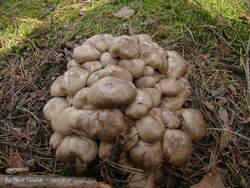
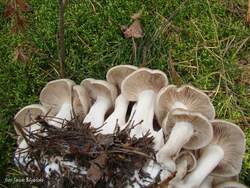
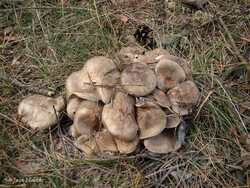
ID 246 211 oznaczenie: Lyophyllum fumosum; • potwierdzenie ID177 183; lokalizacja: 1 km N od wsi Wólka Pytowska, gm.Kodr±b, pow. radomszczański, woj. łódzkie, DE47; data zbioru: 14 wrz 2014; sielisko, podłoże, sposób wzrostu: trawiaste pobocze drogi biegn±cej przez las sosnowy, na ziemi, ponad 100 owocników w kilku wi±zkach; leg. det. Jacek Nowicki; eksykat: tak, wy¶lę Kustoszowi Bazy Ani Kujawie; uwagi: fot.703224 fot.703225 fot.703226 [notatka: nie] [fotografie: tak];
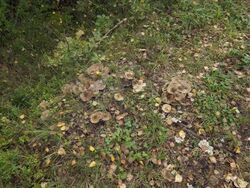
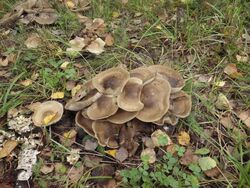
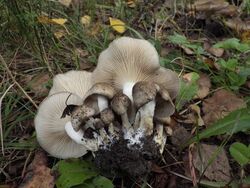
ID 285 937 oznaczenie: Lyophyllum fumosum; lokalizacja: Góra Kamieńska, pn.stok; gm.Kamieńsk, pow. radomszczański, woj. łódzkie [51st 13' 48" N i 19st 24' 34,5" E], DE35; data zbioru: 4 cze 2016; sielisko, podłoże, sposób wzrostu: liściaste nasadzenia na stoku, na ziemi, pod topolami, ponad 30 owocników w 4 wiązkach; leg. det. Jacek Nowicki; eksykat: tak, wyślę Kustoszowi Bazy Ani Kujawie; uwagi: fot.856987 fot.856988 [notatka: nie] [fotografie: tak];
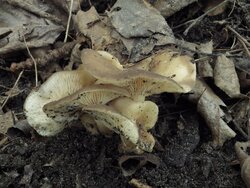
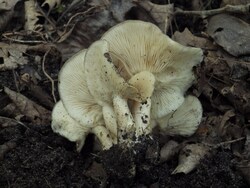
ID 296 884 oznaczenie: Lyophyllum fumosum; lokalizacja: Mochle, pow. bydgoski, woj. kujawsko-pomorskie, CC15; data zbioru: 10 wrz 2016; sielisko, podłoże, sposób wzrostu: Ogród przydomowy., Ziemia - pod czereśnią., 2 wiązki - około 15 owocników.; leg. det. Przemysław Drzewiecki; eksykat: Tak - zostanie przesłany kustosz Annie Kujawa; uwagi: fot.905728 fot.905729 [notatka: nie] [fotografie: tak];
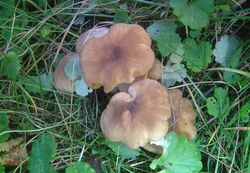
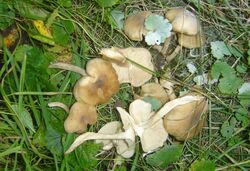
ID 318 290 oznaczenie: Lyophyllum fumosum; lokalizacja: Przasnysz,ul Świerczewo,gm.Przanysz M, pow. przasnyski, woj. mazowieckie, EC35; data zbioru: 2 paź 2018; sielisko, podłoże, sposób wzrostu: Trawnik na posesji spółdzielni mieszkaniowej, pniak wierzbowy, wiązka,kilknaście owocników; leg. det. Romuald Tomaszewski; eksykat: tak,zostanie przesłany do kustosza bazy; uwagi: fot.1025560 fot.1025561 fot.1025562 fot.1025563 [notatka: nie] [fotografie: tak];
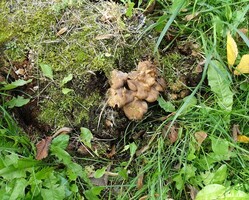
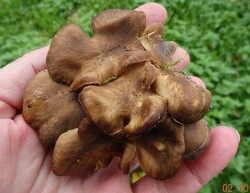
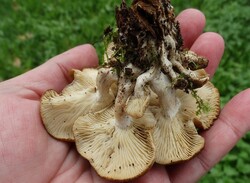
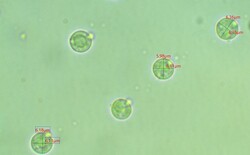
ID 332 781 oznaczenie: Lyophyllum fumosum; lokalizacja: 1 km SE od wsi Grzebień, gm.Radomsko, pow. radomszczański, woj. łódzkie [GPS: 51st 1' 34,5" N i 19st 30' 30,8" E], DE56; data zbioru: 11 cze 2020; sielisko, podłoże, sposób wzrostu: bór sosnowy z domieszką dębów, na ziemi, pod dębami czerwonymi, kilkadziesiąt owocników w kilku wiązkach; leg. det. Jacek Nowicki; eksykat: tak, wyślę Kustoszowi Bazy, Ani Kujawie; uwagi: fot.1147831 fot.1147832 fot.1147833 fot.1147834 fot.1147835 [notatka: nie] [fotografie: tak];
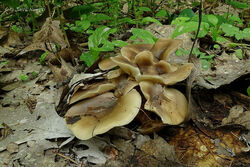
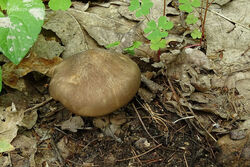
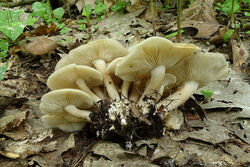
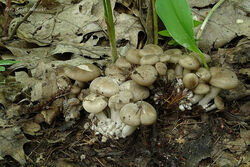
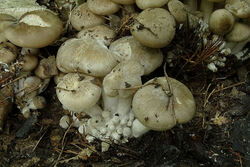
ID 350 110 oznaczenie: Lyophyllum fumosum; lokalizacja: Góra Kamieńska, zach. zbocze; gm. Kamieńsk, pow. radomszczański, woj. łódzkie, DE35; data zbioru: 19 wrz 2021; sielisko, podłoże, sposób wzrostu: las mieszany; pobocze drogi, na ziemi przemieszanej z materiałem roślinnym, ponad 100 owocników w 11 wiązkach; leg. det. Jacek Nowicki; eksykat: tak, wyślę Kustoszowi Bazy, Ani Kujawie; uwagi: GPS: 51st 13' 19,5" N 19st 24' 8" E; fot.1268329 fot.1268330 fot.1268331 fot.1268332 fot.1268333 fot.1268334 [notatka: nie] [fotografie: tak];
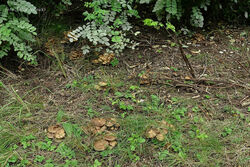
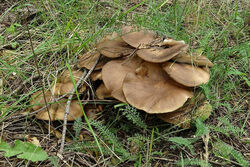
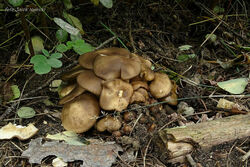
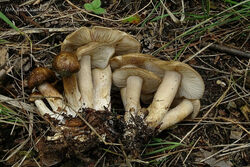
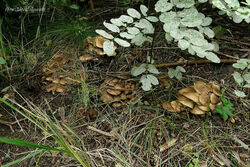
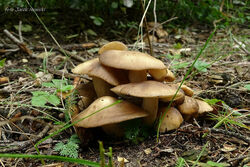
ID 362 757 oznaczenie: Lyophyllum fumosum; lokalizacja: Radomsko, okolice oczyszczalni ścieków; gm. Radomsko, pow. radomszczański, woj. łódzkie [GPS: 51,0474 19,4263], DE55; data zbioru: 10 paź 2022; sielisko, podłoże, sposób wzrostu: liściaste zarośla graniczące z olsem, na ziemi, ok. 40 owocników w wiązce; leg. det. Jacek Nowicki; eksykat: tak, wyślę Kustoszowi Bazy, Ani Kujawie; uwagi: fot.1385133 fot.1385134 [notatka: nie] [fotografie: tak];
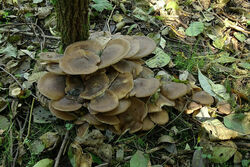
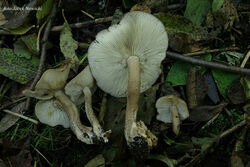
ID 372 994 oznaczenie: Lyophyllum fumosum; lokalizacja: 1 km NE od wsi Lipie; gm. Radomsko, pow. radomszczański, woj. łódzkie [GPS: 51,0453 19,4066], DE55; data zbioru: 30 wrz 2023; sielisko, podłoże, sposób wzrostu: bór sosnowy; pobocze drogi leśnej w obniżeniu terenu; olcha, osika, brzoza, na ziemi, ponad 80, większość w dwóch wiązkach; leg. det. Jacek Nowicki; eksykat: tak, wyślę Kustoszowi Ani Kujawie; uwagi: fot.1489174 fot.1489175 fot.1489176 [notatka: nie] [fotografie: tak];
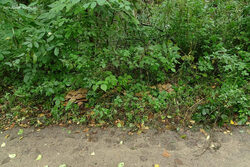
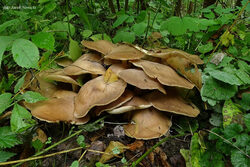
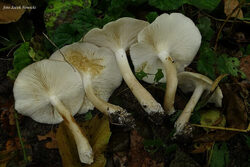
ID 373 027 oznaczenie: Lyophyllum fumosum; lokalizacja: Gdańsk-Oliwa, TPK, Dolina Radości, pow. Gdańsk, woj. pomorskie, CA89; data zbioru: 8 paź 2023; sielisko, podłoże, sposób wzrostu: aleja lipowa na wale przy Potoku Oliwskim, lipa, olsza, klon, jawor, na ziemi, trzy kępki po kilka-kilkanaście owocników i kilka pojedynczych; leg. det. Marian Sęktas; eksykat: TAK, zostanie przesłany do kustosza bazy; uwagi: [bf:1489075] ; Silny zatykający mączny zapach. Smak łagodny ; fot.1489544 fot.1489545 fot.1489546 fot.1489547 fot.1489548 fot.1489549 fot.1489550 fot.1489551 fot.1489552 fot.1489553 fot.1489554 fot.1489555 fot.1489556 fot.1489557 fot.1489558 ; strzępki podstawy blaszki ; fot.1489559 fot.1489560 ; strzępki skórki kapelusza ; fot.1489561 fot.1489562 ; sprzążki ; fot.1489563 [fotografie: tak]; związane wątki bio-forum.pl: 1489075 ;
ID 374 215 oznaczenie: Lyophyllum fumosum; lokalizacja: Wzgórza Bukowe (rez. Buczynowe Wąwozy), 1,8 km NW od Dobropola Gryfińskiego, pow. gryfiński, woj. zachodniopomorskie, AB94; data zbioru: 30 paź 2023; sielisko, podłoże, sposób wzrostu: pobocze drogi przy łęgu, na ziemi, kilkanaście owocników; leg. det. Grazyna Domian; eksykat: tak; uwagi: fot.1499870 fot.1499871 fot.1499872; zarodniki: 5,7-6,6 µm, średnio 6,1 µm: fot.1499873; zapach mączny [notatka: tak] [fotografie: tak];
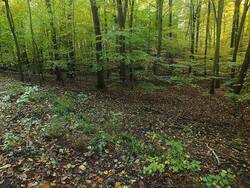
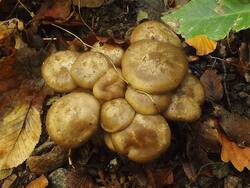
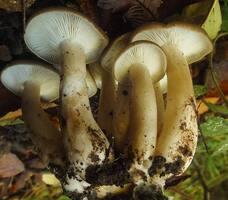
ID 375 082 oznaczenie: Lyophyllum fumosum; lokalizacja: Kmiecizna; gm. Kamieńsk, pow. radomszczański, woj. łódzkie [51,2011 19,4063], DE35; data zbioru: 24 wrz 2023; sielisko, podłoże, sposób wzrostu: tyczkowina sosnowa u podnóża góry, na ziemi, kilkadziesiąt owocników w kilku wiązkach; leg. det. Jacek Nowicki; eksykat: tak, otrzyma Kustosz Ania Kujawa;