| |||
| |||
|
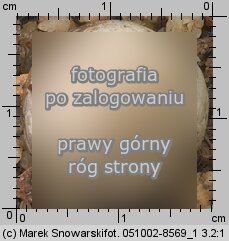
cechy makroskopowe
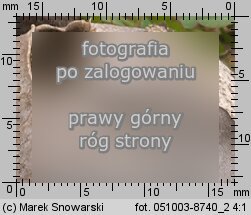
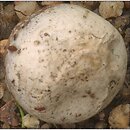
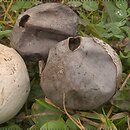
Owocnik kulisty lub nieco spłaszczony, 10-35(50) mm średnicy, przytwierdzony do podłoża pęczkiem grzybni, dojrzały łatwo odrywa się. Osłona zewnętrzna (egzoperydium) biała, potem żółtawa, brązowieje, początkowo gładkie, potem o nieco zamszowa, ziarnistaj powierzchni, łuszczy się nieregularnymi płatami poczynając od szczytu, jak obierane jajko. Osłona wewnętrzna (endoperydium) pergaminowata, papierowata, dość sztywna, gładka, cienka, ołowianoszara do brązowoszarego, matowa, jedynie u bardzo starych egzemplarzy czernieje; pęka na szczycie dużą, nieregularną szczeliną, u starych owocników brzeg może być regularnie wywinięty. Gleba biała, potem żółtosiarkowa, oliwkowożółtawa, oliwkowobrązowa do umbry; kłaczkowata; podglebia brak.
Spherical or slightly flattened, 10-35(50) mm in diameter, attached to the substrate with mycelial strands, easily removed when mature. Exoperidium white, later yellowish, becoming brown; smooth, then with suedelike, granular surface and peeling off irregularly shaped patches starting from the top, like shelling off an egg. Endoperidium parchmenty, paper-like, quite stiff, smooth, thin, lead-grey to brown-grey, dull only at very old specimens blackish; cracks open at the top forming a large, irregular crevice, in old sporocarps the edge may be regularly rolled up. Gleba white, later sulphur-yellow, olive-yellow, olive-brown to umber; floccose; subgleba absent.
cechy mikroskopowe

Zarodniki krótko jajowate lub elipsoidalne, drobno brodawkowane, 4-5 µm średnicy, brązowe, przeświecające z kroplą; z długimi sterygmami, 8-14 µm.

Spores shortly ovoid or ellipsoid, slightly verrucose, translucent with a drop, 4-5 µm, brown; with long pedicels, 8-14 µm.
jadalne czy trujące? 🟡🟢
Młode owocniki, o jeszcze białym wnętrzu, są jadalne.[105]

Pospolita, zwłaszcza na niżu.
Owocniki wyrastają zwykle w grupach, od lata do jesieni, poza lasami, na glebach piaszczystych, umiarkowanie wilgotnych i suchych, w miejscach trawiastych i ruderalnych; gatunek nitrofilny. W wyższych położeniach na tych samych stanowiskach występuje raczej kurzawka czerniejąca (Bovista nigrescens).
Common, usually on lowlands; usually gregarious outside forests in grassy places like meadows, pastures or roadsides; they prefer sandy soils; nitrophilous. In higher elevations on the same habitatas grow rather kurzawka czerniejąca (Bovista nigrescens).
uwagi
Od purchawek (Lycoperdon) kurzawki różnią się brakiem podglebia i nieregularnie pękającą osłoną zewnętrzną. Podobna kurzawka czerniejąca (Bovista nigrescens) różni się ciemną brązowa do czarniawej, błyszczącą osłoną wewnętrzną u dojrzałych owocników.
Bovista species differs from similar purchawka (Lycoperdon) by absence of sterile subgleba and rupturing endoperidium into rounded lobes at maturity. Similar kurzawka czerniejąca (Bovista nigrescens) is bigger, has dark, brown to blackish, and shiny endoperidium at mature specimens; Bovista plumbea has lead-white, not shiny endoperidium.
wybrane okazy · selected collections ⇈
#31
/Czechy, Trebonsko, Suchdol nad Luznici/
#9
/Czechy, Trebonsko, Luznice, Dvur Hamr/
ta strona być może używa ciasteczek (cookies), korzystając z niej akceptujesz ich użycie — więcej informacji